In the world of cross‑border e‑commerce, eBay, as one of the major global marketplaces, attracts a huge number of sellers. However, many experienced sellers face a common dilemma: how to scale up their business and reduce the risk of relying on a single account without violating platform policies. This is where the concept of an “eBay stealth account” comes in.
It’s important to clarify that this article focuses on how to manage multiple eBay accounts in a legal and compliant way, not on encouraging rule‑breaking. We’ll start from real‑world scenarios to help you understand what a stealth account really is, when it’s useful, and the key steps to operating it safely.
What is an eBay stealth account and why do you need one?
The real definition of a stealth account
A so‑called “stealth account” essentially refers to an eBay account registered with identity information different from your main account. This information includes name, address, payment method, email, and so on. From a technical standpoint, it works exactly like a normal account; the only difference is that the registration details are independent.
Many people mistakenly believe that a stealth account is the same as a “fake account”, which is not accurate. A truly safe stealth account should be based on real, authorized identity information (for example, details from family members or friends who have given you permission), not fabricated data.
Why sellers need to run multiple accounts
In day‑to‑day operations, several situations can create the need for multiple accounts:
- Risk reduction: if your main account is suspended due to an unexpected violation, a backup account can keep your business running
- Category expansion: different accounts can focus on different product lines, improving each store’s perceived expertise
- Strategy testing: you can test pricing and marketing strategies on new accounts without affecting the metrics of your main account
- Search coverage: listing the same product from multiple accounts can help you occupy more positions in the search results
For example, one seller’s main account had its selling privileges restricted due to malicious negative feedback from a buyer. Without a backup account, their entire business chain would have broken down. This is exactly why “not putting all your eggs in one basket” is especially important in cross‑border e‑commerce.
Advantages of stealth accounts and the risks you must watch out for
Three key advantages of using stealth accounts properly
When you operate stealth accounts correctly, you can gain the following concrete benefits:
- Business continuity assurance: if one account encounters problems, the others remain unaffected
- Multiplied product exposure: a hot‑selling item can be listed across different stores, giving you higher overall search coverage
- Diversified income streams: you avoid a complete income shutdown caused by issues with a single account
For instance, if a certain product performs very well on Account A, you can also list it on Account B (while adjusting titles, images, and other elements), allowing you to occupy multiple positions on the search results page. This strategy is also common on Amazon and other platforms, but you must pay attention to compliance.
Three major risks you absolutely cannot ignore
Stealth accounts are not a magic bullet. The following risks may cause serious losses:
- Account linkage detection: eBay’s risk‑control system monitors IP addresses, browser fingerprints, device information, and more. Once links are detected, multiple accounts may be suspended together
- Penalties for fake information: opening an account with fabricated identity data is a clear violation, and consequences can be more severe than for normal policy breaches
- Accounts from unknown sources: accounts bought from third parties may come with a hidden history of violations, which might “explode” at any time after you take them over
It must be emphasized: eBay does not officially support multi‑account operation (unless you are a certified large‑scale seller). Therefore, all such activities need to be carried out “low‑profile”, minimizing the chance of triggering platform reviews.
How to safely create an eBay stealth account (complete 6‑step process)
Step 1: Choose a legitimate source of identity information
This is the most critical step in the entire process. You have two compliant options:
- Authorized use by relatives or friends: talk with family members or friends and use their real information for registration (ideally with written or recorded proof of authorization)
- Register a business account: register in the name of a company, using information of the legal representative or authorized employees
Strictly prohibited: buying unverified accounts, using AI‑generated fake profiles, or stealing someone else’s identity. Such actions not only violate eBay policies but may also break the law.
Step 2: Set up an independent network environment
eBay’s risk‑control system tracks data on multiple levels, primarily:
- IP address (country, city, ISP)
- Browser fingerprint (version, plugins, screen resolution, etc.)
- Device information (operating system, hardware ID)
To avoid account linkage, you need to:
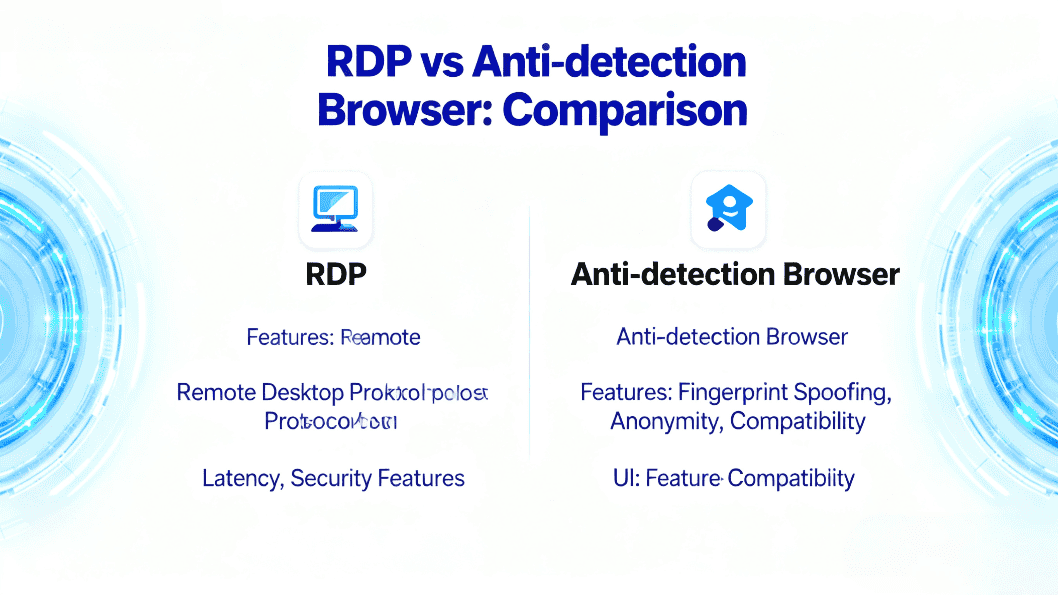
- Use remote desktop services (VPS or cloud servers) so each account has its own dedicated IP
- Combine this with an anti‑detect browser (such as MasLogin), assigning a unique browser profile to each account
- Avoid logging into different accounts back and forth on the same physical device
Professional tools like the MasLogin anti‑detect browser can allocate an independent browser fingerprint to each account, significantly reducing the risk of being linked by the platform.
Step 3: Build browser trust
Before officially registering the account, you need to “warm up” the environment:
- Use the new environment to browse eBay for 2–3 days, 1–2 hours per day
- Visit product pages in different categories, search for items, and view seller profiles
- Simulate genuine user behavior (scroll through pages, stay on pages and read, add items to cart, etc.)
The goal of this process is to make eBay’s system regard this as a normal new user, not a batch‑created bot account.
Step 4: Complete the account registration
After accumulating sufficient browsing history, register following eBay’s official steps:
- Use an email address that matches the identity information (ideally a newly created, dedicated email)
- Fill in real address, phone number, and other details
- Link an independent payment method (PayPal or credit card)
Key tip: keep using the same network environment throughout the registration process; do not switch IP addresses or devices in the middle.
Step 5: Account nurturing period (7–14 days)
Do not rush to list products right after registration. Continue nurturing the account:
- Log in daily and browse products
- Add interesting products to your watch list
- Interact with the site by reading Q&A or checking other buyers’ reviews
- Complete your profile (avatar, personal introduction, etc.)
The goal at this stage is to accumulate cookie and behavior data so that eBay’s algorithm can develop a trust model for your account.
Step 6: Start operating and scale cautiously
After your account has run stably for 1–2 weeks, you can:
- Upload your first batch of products (start with low‑priced, low‑risk items)
- Strictly comply with eBay’s policies and avoid any action that might trigger a manual review
- Regularly monitor the health metrics of your account
Buying ready‑made stealth accounts: is it worth the risk?
There are indeed gray‑market channels that sell eBay accounts, with prices ranging from USD 150 to several thousand. However, we strongly advise against doing this, for reasons including:
- Uncontrollable historical risk: you cannot know whether the previous owner engaged in policy violations on that account
- Ownership issues: if a dispute arises, the original owner can potentially reclaim the account at any time
- Overpriced: with similar effort and cost, you can legally register several accounts you fully control
If you genuinely need to expand quickly, a more reasonable approach is to obtain authorized identity information from your personal network (relatives and friends) or to set up multiple business entities to build a more corporate‑style structure.
Compliance and legal boundaries: non‑negotiable bottom lines
Are eBay stealth accounts legal?
From a legal standpoint, using real, authorized identity information to register multiple accounts is not illegal in itself. However, you must be aware of the following:
- eBay’s user agreement specifies that individual sellers are in principle limited to one account
- If the platform detects account linkage, it has the right to suspend or terminate all related accounts
- Registering with fake information constitutes fraud and may incur legal liability
Therefore, the core principle is: operate cautiously within legal and policy boundaries, rather than gambling on loopholes.
How to reduce the risk of detection
In addition to the technical isolation mentioned earlier, pay attention to:
- Do not register a large number of accounts in a short period
- Different accounts should have differentiated product lines and pricing strategies
- Avoid having your accounts follow, like, or trade with each other
- Use different logistics methods and suppliers for different accounts
FAQ
What should I do if my stealth accounts get linked?
Once accounts are linked, eBay may ask for additional identity verification or directly suspend them. The best response is:
- Immediately stop operating all linked accounts
- Contact eBay customer support and explain the situation (if these are legitimately authorized accounts from relatives or friends, provide proof)
- Reevaluate your isolation setup and identify which step caused the linkage
Do anti‑detect browsers really work?
Professional anti‑detect browsers (such as MasLogin) use technical measures to simulate different hardware and software environments, which can indeed lower the probability of your accounts being linked. But note:
- Tools are only a supplement; your operating habits are just as important
- Choose reputable, technically mature tools (you can refer to the guides in the MasLogin Help Center)
- Update your browser fingerprint configurations regularly instead of using the exact same parameters long‑term
Should beginners start with stealth accounts right away?
Not recommended. For new eBay sellers, the right approach is:
- First use a primary account to learn platform rules and operating logic
- Accumulate at least 3–6 months of selling experience
- Consider multi‑account layouts only after your business has stabilized
Jumping straight into stealth accounts is high‑risk and may lead to all accounts being suspended due to inexperienced mistakes.
Does eBay actively hunt for stealth accounts?
eBay’s risk‑control system is mostly triggered passively and relies on:
- Algorithms that detect abnormal behavioral patterns
- User reports (for example, buyers reporting fake shipping addresses)
- Repeated use of the same payment information
As long as you keep a low profile and comply with the rules, the odds of being proactively targeted are relatively low.
If I don’t want to take risks, are there other ways to grow my business?
Yes. Safer strategies include:
- Improving product quality and service on a single account to gain more traffic through reputation
- Using off‑platform marketing, such as Facebook, to drive external traffic
- Partnering with other sellers via distribution or dropshipping to expand scale
- Applying for eBay’s officially certified business seller status so you can legally open multiple sub‑accounts
Operating eBay stealth accounts is essentially a balancing act between risk and return. If you choose to go down this road, keep in mind: compliance is the bottom line, technology is only a tool, and caution is the guiding principle. Rather than risking fake identities or buying accounts from unknown sources, invest the time to build a legal, sustainable multi‑account system.
Ultimately, regardless of the strategy you choose, continuously tracking platform policy changes and consistently improving your product quality and customer experience are the real core competitive advantages for long‑term success in cross‑border e‑commerce.