Summary — This hands-on guide (based only on your provided transcript) helps low-end PCs get Android open and usable with four lightweight emulators—MEmu Play 9, Lenovo Emulator, Smart Gaga, MuMu Nebula—and then shows when to move beyond emulators to five more scalable alternatives for multi-account automation: anti-detect browsers (e.g., MasLogin), cloud phones, physical device farms, server-hosted Android containers, and PC sandbox/multi-instance tools. You’ll get audience fit, core traits, pros/cons, and risk controls—so you can upgrade from “it runs” to “it scales safely.”
Why “low-spec can still run”
- Light OS + sane tuning. Low-end-friendly emulators often use a lighter system image (e.g., Android 9/Pie), covering mainstream apps while keeping RAM/CPU in check. See: Android 9 overview.
- System prerequisites matter more than sliders. Enabling CPU virtualization (VT-x/AMD-V) and trimming background apps usually beats cranking every graphic knob. See: Android Emulator basics.
- Pick stability over max FPS. On older machines, prioritize “steady first,” not ultra-quality video or extreme frame rates.
Four low-end-friendly Android emulators
1.MEmu Play 9 (Balanced, modern-light)

- OS: Android 9 (good app/game compatibility).
- Hardware: Dual-core CPU + 4 GB RAM can start; first run benefits from minor spec-based tweaks.
- Features: Key mapping, multi-instance, screen recording.
- Tune-up: Enable virtualization in BIOS, kill noisy background apps, step graphics/FPS down until stable.
- Best for: Budget users needing complete basics with decent stability.
- More on multi-instance concepts: Android Emulator.
2.Lenovo Emulator (Minimalist “hidden gem”)
- Feel: Plain UI, snappy; no Google Play built-in (store is another language).
- Install: Use APK import (one extra step, but works). Learn APK packaging: App distribution basics.
- Hardware: Runs at 2 GB RAM (recommend 4 GB+ for smoothness).
- Best for: Users OK with manual APK installs who want fast starts and low footprint.
3.Smart Gaga (Low-end FPS-friendly)
- Footprint: Runs on 2–3 GB RAM.
- Trait: Turbo AOW engine favors lighter FPS titles (e.g., Free Fire, PUBG Lite, CoD Mobile).
- Best for: Older PCs focused on shooter/competitive gameplay with stable frames over max fidelity.
4.MuMu Nebula (Ultra-light)

- Barrier to entry: Can run on 1 GB RAM and does not require VT.
- Limits: Not for heavy 3D; ideal for basic apps, casual games, repurposing old laptops.
- Best for: Very old hardware, office/AFK basics, “just needs to run.”
Low-spec “peace-of-mind” checklist
- Turn on VT-x/AMD-V (unless you use a VT-free ultra-light like MuMu Nebula).
- Silence background hogs (sync drives, real-time AV, dozens of browser tabs).
- Tune by stability: Lower resolution/FPS/rendering mode first; raise only after it’s steady.
- Scale slowly: On old PCs, clone from a stable baseline and cap concurrent instances.
- Storage & drivers: Give emulators a dedicated folder + free space; keep GPU/chipset drivers at system-recommended versions (not necessarily bleeding-edge).
Why Android emulators alone aren’t enough for multi-account work
- Fingerprints converge. Multiple instances often share kernel/driver/NIC stacks, producing highly similar software/hardware fingerprints (system props, render pipeline, fonts, missing sensors). Some apps also check integrity signals such as Play Integrity—closer to real devices are favored.
- Behavior looks synthetic. Mouse/keyboard scripting paths, window-switch rhythms, and draw-frame distributions differ from touch/ sensor noise on real devices—behavioral risk models flag this.
- Network/timezone/language collide. Shared egress IP/ASN, jittery proxies, and mismatched timezone-language-DNS patterns cause cross-account overlaps.
- Ops cost & stability. Emulators eat CPU/RAM/IO; images, updates, and script compatibility add overhead; crash/lock-up risk is higher than real/hosted mobile.
- Functional & policy limits. Camera, Bluetooth, GPS, push channels, or vendor services may be incomplete; many platforms restrict automation/emulated use in their ToS—stay compliant.
Better path
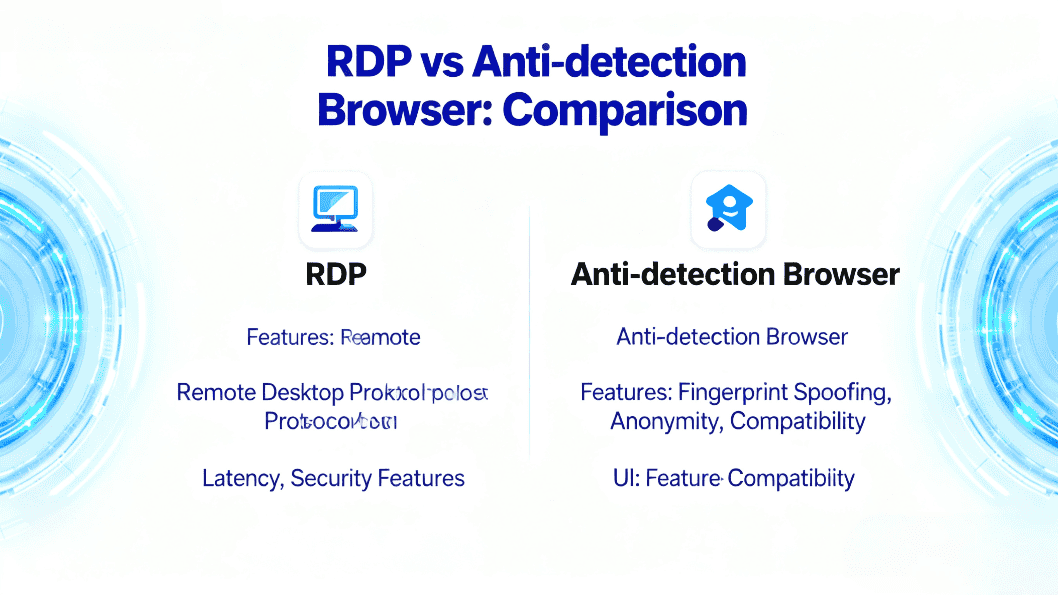
- Browser-side workflows: Prefer an anti-detect browser (e.g., MasLogin) to give each account an independent fingerprint & storage plus RPA/API for batch orchestration.
- Mobile-only workflows: Use cloud phones or server-hosted Android containers; for native sensors, deploy a physical device farm.
- Consistency first: Keep network, timezone, language, storage, and interaction patterns coherent per account.
Five emulator alternatives for multi-account automation (no tables)
1.Anti-detect browser (e.g., MasLogin)
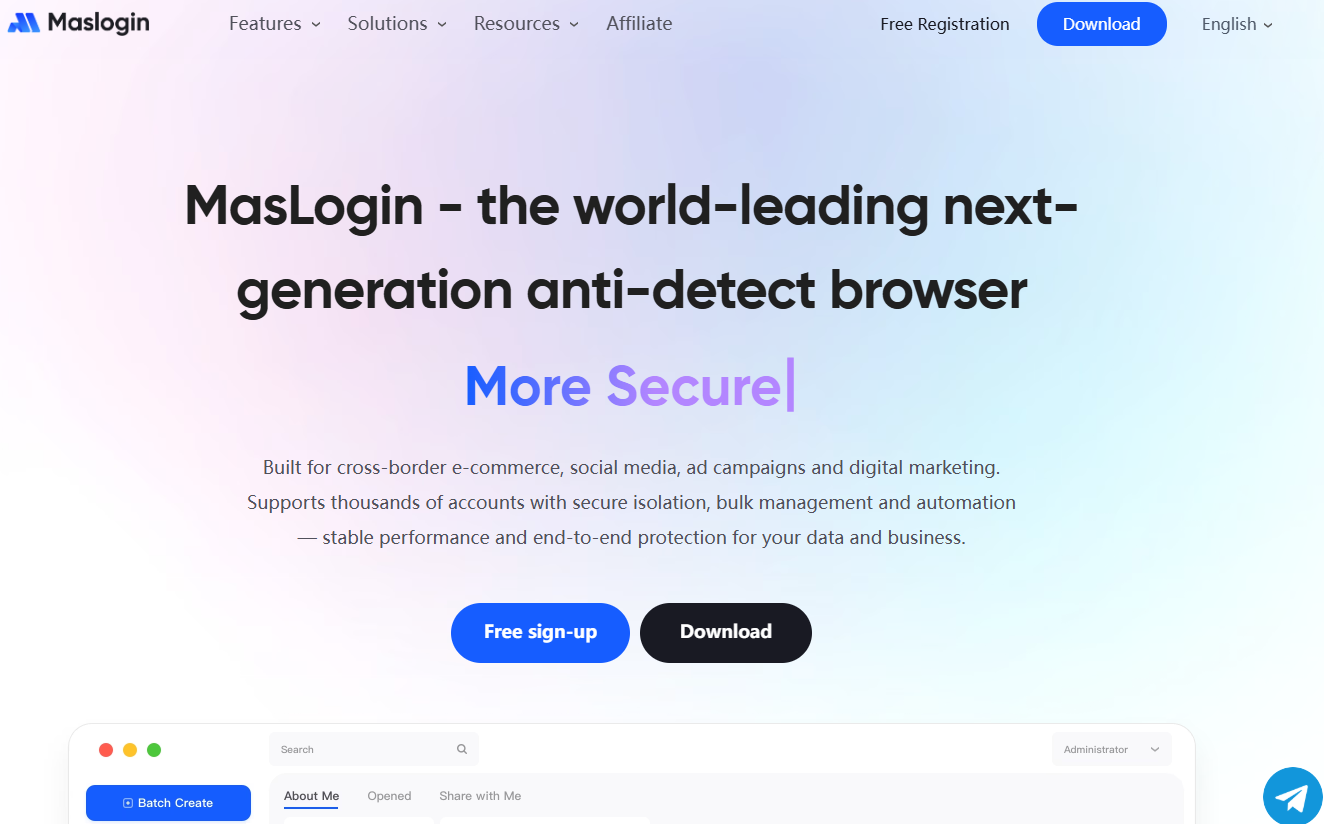
- For: Cross-border e-commerce, ads, social ops, affiliate teams needing large-scale account isolation.
- Core: One-account-one-environment (UA, Canvas/WebGL/WebGPU, timezone, fonts, HW prints), concurrent multi-open, team roles, RPA scripts & API orchestration, window sync.
- Trade-off: Not Android-native; if you need mobile-sensor features, pair with a mobile solution.
- Try it: MasLogin homepage → https://www.maslogin.com/ | RPA feature page → https://www.maslogin.com/features/rpa
2.Cloud phones (e.g., DuoPlus)
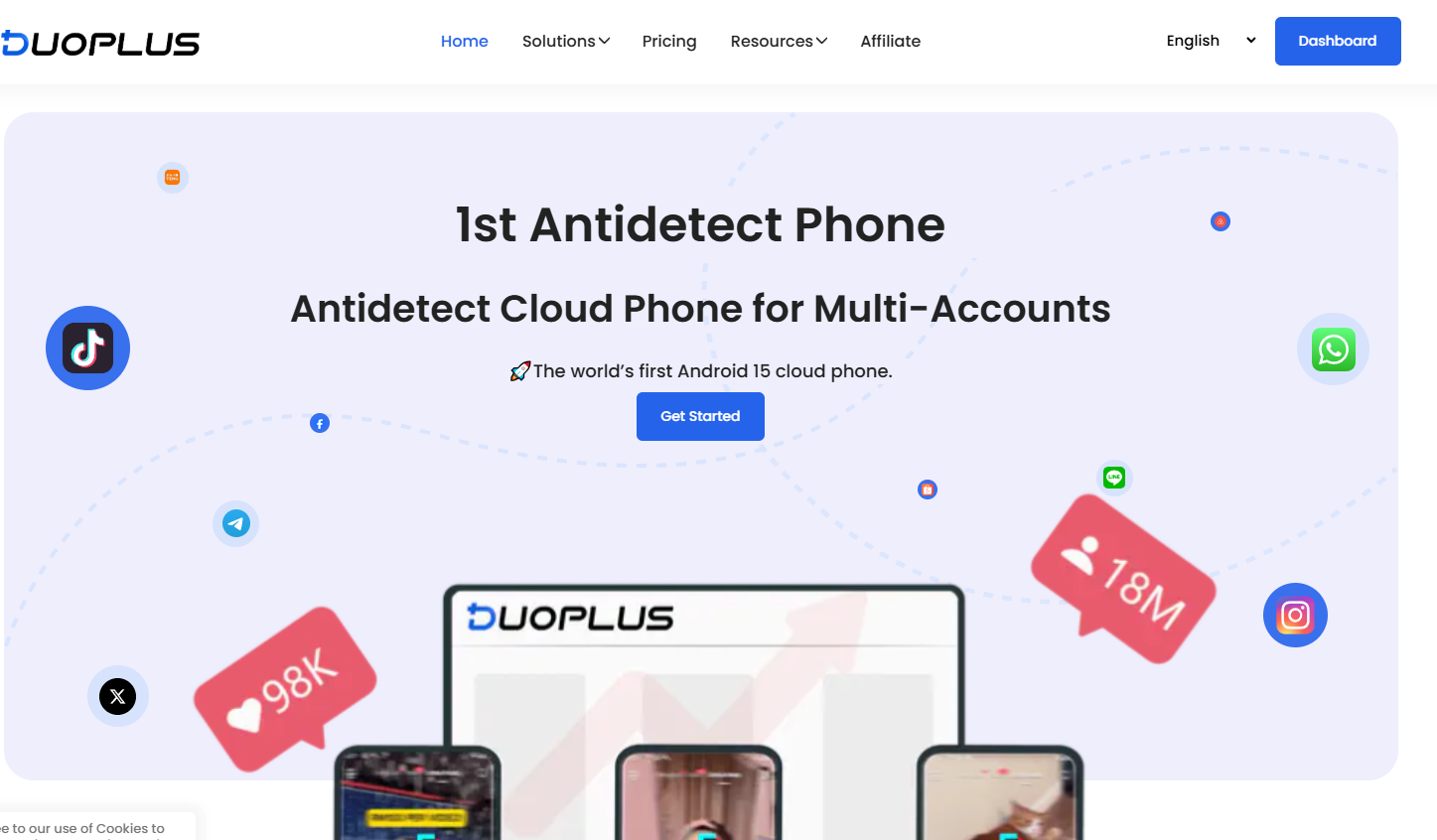
- For: 24/7 uptime, remote fleet control, location/IP diversity, API-friendly ops.
- Core: Hosted Android instances, centralized management, elastic scaling.
- Trade-off: Monthly costs, latency, provider compliance/SLA diligence required.
3.Physical device farm
- For: Native camera/GPS/Bluetooth/push are must-haves.
- Core: Real-device signals, best compatibility, authentic human-like interaction traces.
- Trade-off: Power/cooling/wiring maintenance, higher CapEx/OpEx, harder unified control.
4.Server-hosted Android containers
- For: Teams with Linux/DevOps skills who want centralized compute.
- Core: Elastic scaling, unified metrics/logging, easy CI/CD & queue integration.
- Trade-off: Higher setup/compatibility bar; limited graphics/sensor support depending on stack.
5.PC sandbox/multi-instance tools
- For: Light isolation on a single workstation.
- Core: Per-instance user-space/sandbox folders; combine with per-instance proxies.
- Trade-off: Weaker anti-linking vs. pro anti-detect browsers; modest automation/collab features.
FAQ — 7 questions newcomers ask
Q1: Can I run this without a discrete GPU?
Yes. These emulators target low-spec machines; iGPU + sane tuning is fine. Think stability first.
Q2: Why does it freeze on launch?
Most often VT is off or background load is high. Enable VT, reboot, then apply the checklist above.
Q3: No Play Store in Lenovo Emulator—now what?
Import APK directly. For concepts, see Google’s docs on app packaging/distribution.
Q4: More instances = more lag—how do I scale?
Use a stable baseline clone and cap concurrency. Old PCs prefer “few and steady” over “many and shaky.”
Q5: Heavy 3D gaming?
Not recommended. These picks prioritize “can run, stays steady.” For heavy 3D, upgrade hardware or go cloud.
Q6: Screen recording/streaming stutters—normal?
Yes—encoding adds load. Lower capture resolution/bitrate or use external capture if needed.
Q7: First boot is super slow—is that expected?
Yes. Initial image/cache setup is slower; cold starts improve afterward.




_00000.png)