

TamilMV is a widely known content sharing platform that offers numerous download links, particularly for Tamil language films. The primary reason the site faces frequent and widespread Geo-blocking is the unauthorized distribution of copyrighted material. Government bodies and content owners pressure Internet Service Providers (ISPs) worldwide to block access to the site. Consequently, users attempting a direct visit often encounter errors like "connection reset" or pages that simply fail to load.
While a Virtual Private Network (VPN) remains a foundational tool for bypassing geographic restrictions, it has limitations, especially for users seeking maximum anonymity and resilience against sophisticated blocking.
Residential Proxies offer a superior level of anonymity compared to typical VPNs or datacenter proxies. They route your traffic through an IP address genuinely provided by an Internet Service Provider to a homeowner.
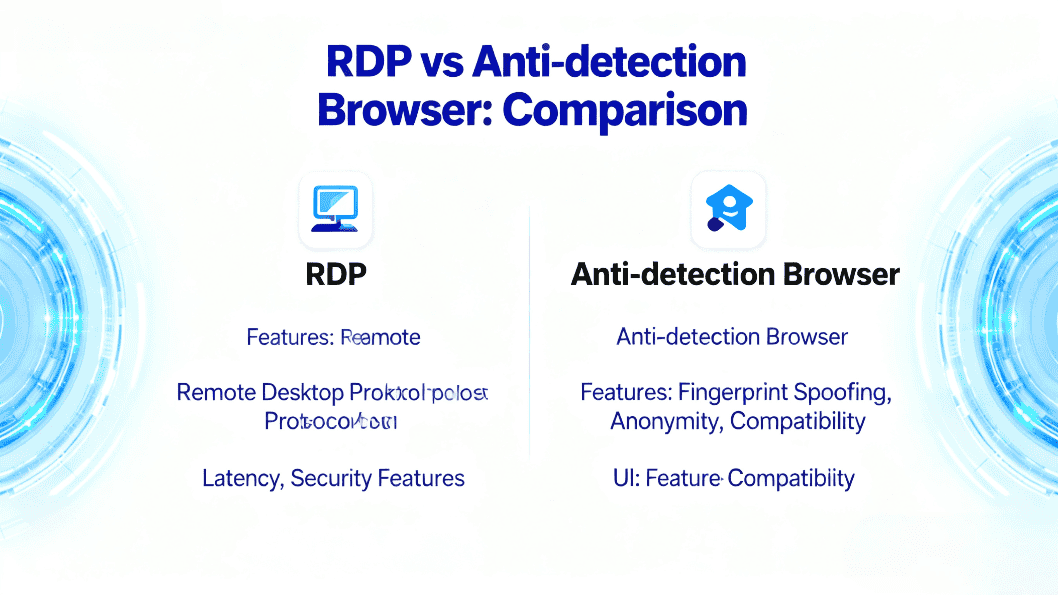
For a professional-grade solution, consider Anti-Detect Browsers. Tools like Maslogin go far beyond simple IP masking.
TamilMV is highly resilient, maintaining access by consistently deploying Mirror Sites (exact copies of the original site) and Updated Domains.
Your ISP often uses its own Domain Name System (DNS) servers, which can be configured to enforce the site blocks. You can bypass this particular block layer by manually switching your device's DNS to a third-party public service, such as Google Public DNS ($8.8.8.8$ and $8.8.4.4$) or Cloudflare's ($1.1.1.1$).
Web-Based Proxy Tools are basic online services where you paste the TamilMV URL, and the service retrieves the page content for you through its own proxy server.
The Tor Browser (The Onion Router) is a specialized tool that bounces your connection through three random relays across the globe, heavily encrypting your traffic at each step.
Combining a tool like Maslogin with a high-quality Residential Proxy is the gold standard for accessing blocked sites like TamilMV. Maslogin manages the subtle details of your browser environment, while the proxy provides a clean, legitimate-looking IP address. This combination ensures maximum stability, speed, and defense against detection, allowing for safe and uninterrupted resource access.
Maslogin's key advantage is its ability to maintain a persistent, unique, and untraceable digital identity. In an environment where TamilMV and its hosting providers are constantly updating their blocking mechanisms, a stable, anonymous profile ensures your access is not cut off due to routine digital fingerprint analysis or IP blacklisting.
For accessing controversial or geographically restricted content like TamilMV, your best defense is a proactive strategy. While a VPN offers fundamental protection, advanced techniques using Residential Proxies and Anti-Detect Browsers grant you greater control and a higher degree of anonymity, making your online activity appear indistinguishable from a standard user. Always ensure your internet activities comply with local laws.
• A: The most effective and covert method is to combine a residential proxy with an anti-detection browser like MasLogin. A residential proxy provides your real IP address, while an anti-detection browser disguises your digital fingerprint, making it difficult for websites to identify that you are using a bypass tool.
• A: Anti-detection browsers (like MasLogin) not only hide your IP address, but more importantly, they can disguise your device information and browser fingerprint (such as Canvas, fonts, etc.), preventing websites from tracking or blocking you through this metadata.
• A: Changing to public DNS servers like Google or Cloudflare can bypass some ISPs' DNS resolution-level blocking. While it may be effective against some blocks, it is ineffective against deeper IP blocking.
• A: TamilMV creates mirror sites and updates new domains. You can find the website's latest valid domain name through search engines, relevant communities like Reddit, or dedicated resource tracking websites.
• A: Because residential proxies use real home broadband IP addresses, which appear as ordinary user traffic to websites, while VPNs use shared, easily identifiable pools of server IPs.
Outline
_00000.png)